Our Mission
The Buffalo Center for Health Equity (BCHE) is committed to eliminating health inequities in our region by addressing the racial, economic, and other social conditions that persist in our communities.
Our Process
The Buffalo Center for Health Equity will utilize its strong relationships with community organizations, government officials, academia, faith-based leadership, and community members to address the social determinants of health.
BCHE is positioned to work in coalition with these key stakeholders using:
- Policy Analysis
- Research
- Advocacy
- Community Engagement
- Program Development

1. Education & Literacy
Access to high-quality learning across all life stages and the ability to understand and use information, especially health information.
2. Workforce Development
Opportunities, training, and support to secure stable, well-paying employment in safe and equitable conditions.
3. Housing
Safe, stable, affordable, and well-maintained places to live, free from displacement or harm.
4. Access to Healthy Foods
Consistent, affordable, and culturally relevant access to fresh, nutritious food within one's community.
5. Access to Primary Care
Reliable, affordable, and culturally competent medical care for everyday health needs, prevention, and support.
Buffalo's Current State
- 61% of renters in Buffalo are cost-burdened, spending 30% or more of their income on rent.¹
- Over 50% of East Side residents live in a USDA-defined food desert.²
- In East Side neighborhoods, residents are more likely to use the ER than visit a primary care provider.³
- The homebuying capacity of a Black family of four is less than 50% of that of a white family of four when controlling for 60% AMI.⁴
- 1 in 6 students drop out of high school every year.⁵
REFERENCES:
1-3 Read to Succeed Buffalo (2023)
4 Census Data, homebuying calculation (2024)
5 Literacy Buffalo (2025)
How We Got Here
- Systemic Inequities:
Redlining, school segregation, community disinvestment. - Classism:
Wealth gaps, labor exploitation, economic divestment. - Policy Failures:
Urban renewal, expressway construction, public housing neglect. - Institutional Decisions:
School closures, hospital consolidation, zoning laws.
Policy / Advocacy
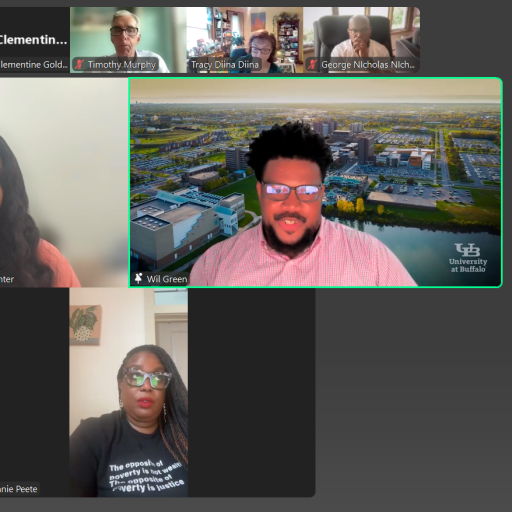
We advocate for policy changes to dismantle systemic barriers, ensuring equitable access.
Learn More
Community Engagement
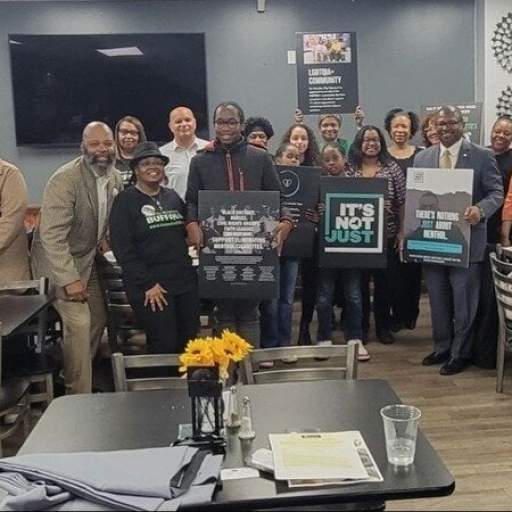
We strive to empower our neighbors through education, outreach, and collaboration.
Learn More

Programmatic Development
We foster innovative programs tailored to address health disparities, working towards comprehensive solutions.
What are the Social Determinants of Health?
Social determinants of health (SDOH) are the conditions in the environments where people are born, live, learn, work, play, worship, and age that affect a wide range of health and quality-of-life outcomes (US Department of Health and Human Services). Examples of SODH are: